Zum Hauptinhalt springen

Live-Marktdaten werden geladen

DubaiUnited Arab Emirates
--:--:--Wetter wird geladen
LondonUnited Kingdom
--:--:--Wetter wird geladen
New YorkUnited States
--:--:--Wetter wird geladen
São PauloBrazil
--:--:--Wetter wird geladen
LagosNigeria
--:--:--Wetter wird geladen
JohannesburgSouth Africa
--:--:--Wetter wird geladen
CairoEgypt
--:--:--Wetter wird geladen
MumbaiIndia
--:--:--Wetter wird geladen
SingaporeSingapore
--:--:--Wetter wird geladen
TokyoJapan
--:--:--Wetter wird geladen
SydneyAustralia
--:--:--Wetter wird geladen
Mexico CityMexico
--:--:--Wetter wird geladen
Marktdaten von ENOSIntel Markets

AI Boom Faces a Reality Check as Investors Reassess Technology Valuations

Rising financing costs and questions about future returns are testing confidence in the companies building the next generation of artificial intelligence.

Dieser Bericht wird in der Originalsprache angezeigt; eine Übersetzung ist noch nicht verfügbar.

Neueste Aktualisierung: 2 min read0
AI Boom Faces a Reality Check as Investors Reassess Technology Valuations
Zusammenfassung

The debate around AI is shifting from what the technology might accomplish to whether current spending levels can produce sustainable commercial returns.

Article contextKey signals, sources and related coverage
Sources recorded
0
Independent sources
0
Published
Last updated

Artificial intelligence remains one of the most closely watched areas of the global economy, but investors are increasingly focused on the financial risks accompanying its rapid expansion. Recent market turbulence has demonstrated how quickly enthusiasm for AI-related businesses can turn into concern about debt, profitability and the scale of infrastructure spending.

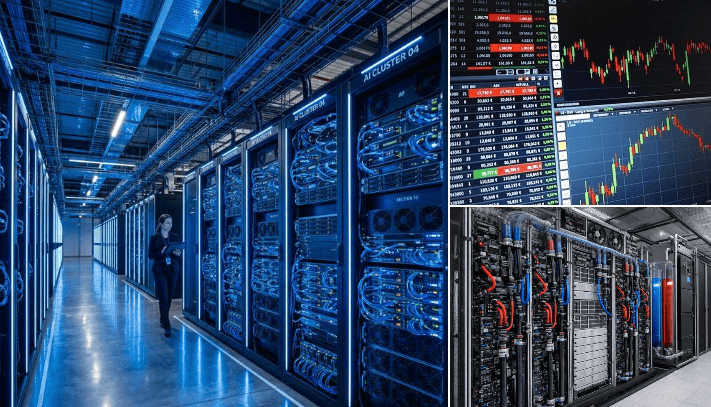
The industry requires enormous investments in computing facilities, advanced chips, electricity and cooling systems. Technology companies are committing capital to meet expected demand for AI services, while specialized cloud providers are borrowing heavily to finance new capacity. Those investments may create substantial long-term value, but they also increase exposure to higher interest rates and slower-than-expected customer growth.

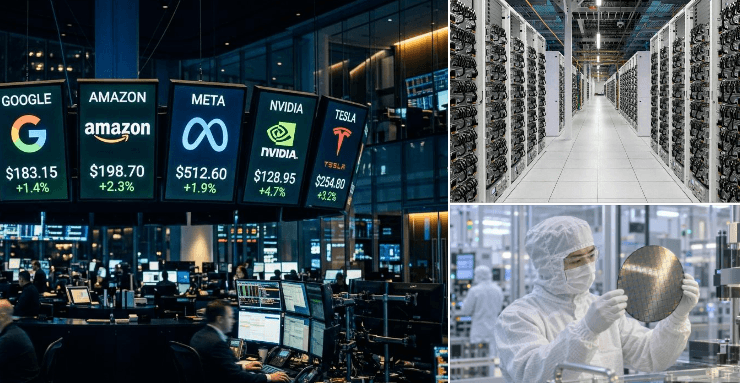
A recent market selloff affected AI-linked equities, including South Korean technology shares, while concerns about the debt burden of specialized computing providers intensified. The pressure illustrates a distinction that investors sometimes overlook: rapid growth in demand for computing does not automatically translate into attractive returns for every company supplying it.

Businesses must ultimately demonstrate that customers will pay enough for AI products to cover the costs of development, infrastructure and operations. Competition could push prices lower even as usage increases. Meanwhile, improvements in computing efficiency might reduce the amount of infrastructure required for certain tasks.

For workers and consumers, the consequences are mixed. AI tools could improve productivity, accelerate research and create new services, but automation may also change employment patterns and increase demand for new skills.

Governments face additional questions involving electricity capacity, data security, competition and the concentration of technological power.

The central issue is not whether artificial intelligence will influence the economy. It is whether the investment cycle can mature into durable productivity gains without exposing financial markets to excessive concentration and borrowing risk. The next stage of the AI story may be decided as much by balance sheets as by technical breakthroughs.

Zuletzt aktualisiert: 16. Oktober 2026 um 01:10

Wie hilfreich war dieser Bericht für Sie?

Wählen Sie eine Antwort. Sie können sie jederzeit ändern oder entfernen.

Artikelreaktionen0

Angemeldete Auswahl wird Ihrem Konto zugeordnet. Anonyme Auswahl verwendet ein datenschutzfreundliches Cookie; ENOSIntel erstellt keine Leser-Fingerprints.

Korrekturen und Aktualisierungen

Für diesen Bericht wurden keine öffentlichen Korrekturen erfasst.

KorrekturrichtlinieFehler melden oder Rechteprüfung anfordern

Intelligente Brillen und Wearables mit künstlicher Intelligenz stehen vor wachsenden Datenschutzherausforderungen, da die Technologiebranche über Smartphones hinausblickt.
Künstliche IntelligenzIntl.

Intelligente Brillen und Wearables mit künstlicher Intelligenz stehen vor wachsenden Datenschutzherausforderungen, da die Technologiebranche über Smartphones hinausblickt.

Die Suche der Technologiebranche nach dem Gerät, das das Smartphone eines Tages ablösen könnte, schreitet voran. Intelligente Brillen und tragbare Assistenten mit künstlicher Intelligenz ziehen immer mehr Investitionen an. Doch genau die Funktionen, die diese Geräte so leistungsstark machen – Kameras, Mikrofone, ständige Konnektivität und KI-Analyse – geben Anlass zu Bedenken hinsichtlich Datenschutz, Aufzeichnung und Einwilligung.