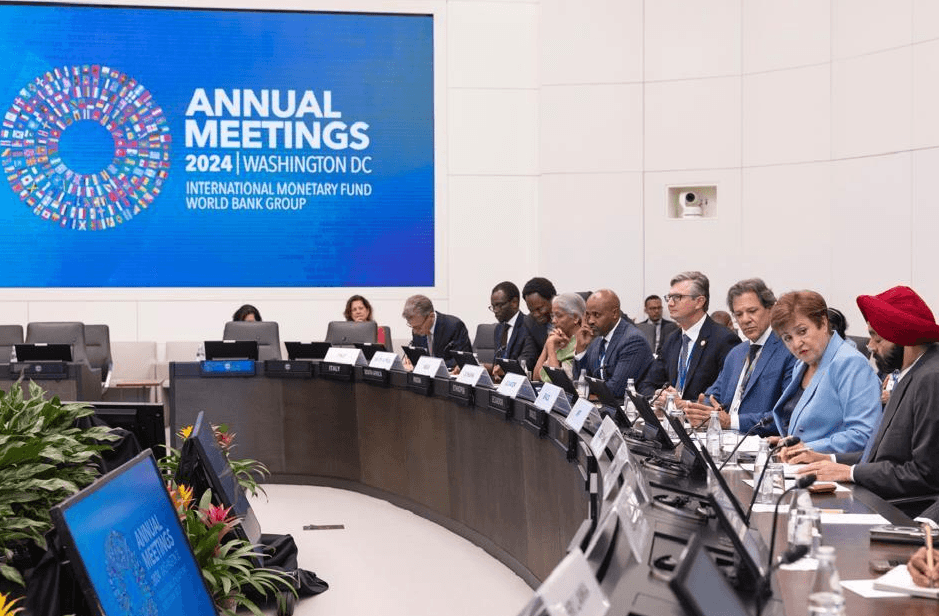
The future direction of international development finance is becoming a point of geopolitical debate after US Treasury Secretary Scott Bessent called for changes to the policies of the World Bank and International Monetary Fund.
In a statement published ahead of international financial discussions, Bessent urged the World Bank to reconsider its restrictions on financing upstream oil and gas projects. He also called for greater attention to deep-sea mining for critical minerals and changes to procurement policies. For the IMF, he argued for a stronger response to economic imbalances associated with what Washington describes as non-market policies.
The proposals raise a fundamental question about the role of development institutions. Should their financing focus more heavily on immediate energy access, industrial competitiveness and the supply of strategic materials, or should environmental safeguards and the transition to cleaner energy remain the dominant considerations?
Supporters of expanded fossil-fuel financing argue that developing economies need dependable energy to support manufacturing, electricity generation and job creation. In countries where energy access remains limited, they contend that investment decisions must reflect practical infrastructure requirements as well as long-term climate objectives.
Critics are likely to warn that financing new oil and gas production could lock countries into emissions-intensive infrastructure for decades. Deep-sea mining presents additional questions about biodiversity, scientific uncertainty and the potential effects of extraction on marine ecosystems.
Critical minerals are increasingly important to batteries, electronics, renewable-energy systems and advanced manufacturing. Their supply chains have consequently become strategic assets, prompting governments to seek alternatives to concentrated sources of production and processing.
Yet changes to the policies of multilateral institutions cannot be made by one government alone. Their implementation depends on governance procedures, shareholder negotiations and the positions of other member countries.
The debate could shape future infrastructure projects, lending priorities and the conditions attached to development funding. It also highlights a broader international divide over how to reconcile energy security, industrial growth and environmental protection.
The outcome will matter most to countries that depend on international financing to expand electricity access, build infrastructure and develop new industries.