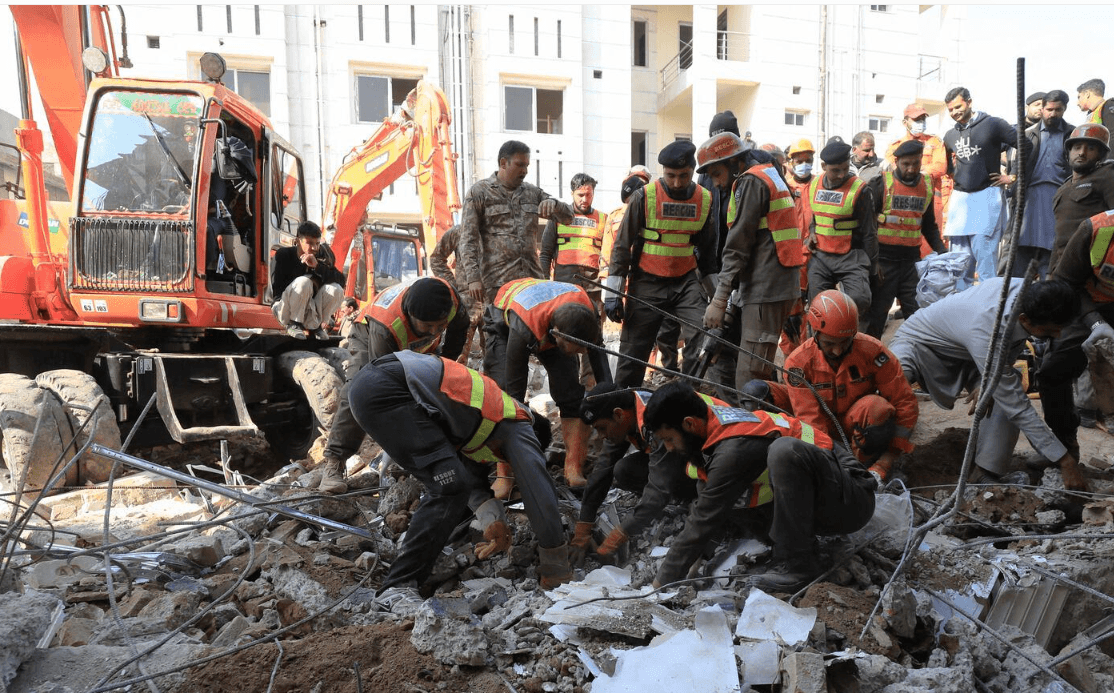
PESHAWAR, Pakistan — A devastating structural collapse at a private school in northwestern Pakistan has killed at least 18 people and injured dozens more, triggering an emergency rescue operation and raising serious questions about the safety of educational buildings across the country.
The incident occurred on Thursday in Peshawar, the capital of Khyber Pakhtunkhwa province, where part of a school building's roof collapsed while children and staff were inside.
According to emergency services officials, 17 children and one teacher were among those killed. More than three dozen people sustained injuries, with hospital authorities warning that several patients remained in critical condition.
Emergency response teams were deployed to the scene to remove collapsed building materials and search for children believed to be trapped beneath the rubble.
Bilal Faizi, a spokesperson for the provincial emergency services, confirmed that rescue personnel were continuing efforts to reach those still unaccounted for.
Medical teams at nearby hospitals were also responding to the emergency, treating injured pupils and assessing the severity of their conditions.
The tragedy has once again brought attention to longstanding concerns about construction quality and building inspections in Pakistan.
Structural failures have repeatedly occurred in different parts of the country, with experts and safety advocates highlighting the dangers associated with inadequate construction materials, weak regulatory enforcement and insufficient maintenance.
A similar incident occurred in Lahore in July, when the roof of a tutoring centre under construction collapsed, killing four schoolchildren.
The latest disaster demonstrates the potentially catastrophic consequences of structural weaknesses in buildings used by large numbers of people, particularly children.
School safety is especially important because classrooms often accommodate substantial numbers of pupils for extended periods, making rapid evacuation difficult when unexpected structural failures occur.
The incident is likely to intensify calls for more comprehensive inspections of educational facilities, stronger construction supervision and greater accountability for compliance with building regulations.
Beyond the immediate emergency response, the tragedy presents difficult questions for local authorities about how vulnerable buildings are identified and whether existing oversight systems adequately protect pupils and teachers.
For families affected by the collapse, however, the immediate priority remains the rescue of those still missing and medical treatment for the injured.
As emergency teams continue clearing debris, the full scale of the disaster may become clearer.