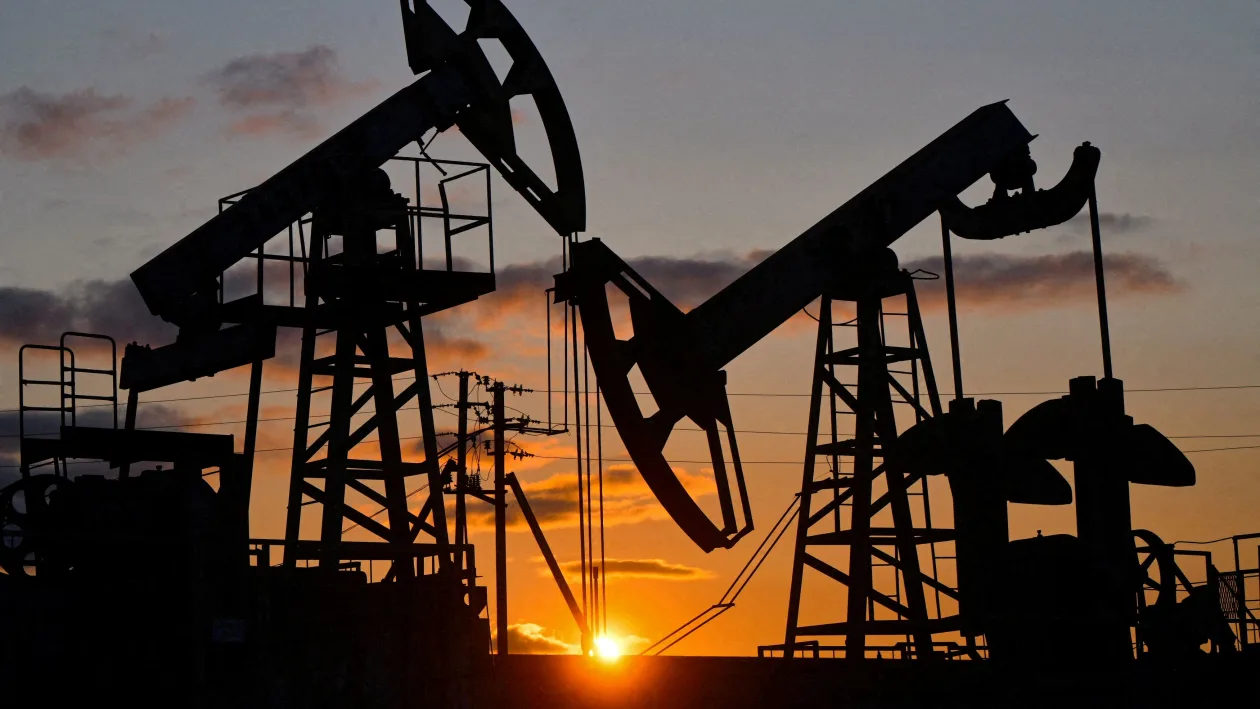
Crude market attempts to stabilise
Oil prices edged higher on 22 September as traders assessed potential diplomatic developments between the United States and Iran following several sessions of declining crude prices.
Reuters reported that oil gained for the first time in five sessions as the market awaited further developments concerning possible US-Iran discussions.
The movement comes after significant volatility in global energy markets, where geopolitical developments have affected expectations for production, transportation and supply.
Brent crude, one of the principal international oil benchmarks, had stabilised around $100 a barrel after previously falling by more than 3%, according to Reuters' broader global-markets reporting.
Diplomacy becomes key market variable
Relations between Washington and Tehran remain an important factor for energy traders because developments involving Iran can affect both physical oil supplies and the geopolitical risk premium embedded in crude prices.
Markets often respond not only to actual changes in supply but also to expectations about future production, sanctions, shipping security and diplomatic agreements.
Progress towards talks could therefore alter expectations about geopolitical risks, while a deterioration in relations could create renewed uncertainty.
Investors will be looking for concrete announcements rather than relying solely on expectations surrounding negotiations.
Oil prices influence the wider economy
Energy markets have implications well beyond oil producers.
Higher crude prices increase transportation and manufacturing costs and can contribute to consumer inflation. This, in turn, can influence central-bank decisions on interest rates.
Oil-importing economies can be particularly exposed when prices remain elevated for extended periods.
Conversely, major oil-producing countries may benefit from increased export revenues, although extremely high prices can weaken global demand.
Financial markets are currently balancing these energy considerations against expectations for interest rates, technology-sector growth and international diplomacy.
The direction of crude prices in the coming sessions is therefore likely to depend on both political developments and conventional market fundamentals such as inventories, production and global demand.
Traders will closely monitor official statements from Washington and Tehran for evidence that discussions are progressing and whether any diplomatic developments could materially affect sanctions or oil supply.
Until greater clarity emerges, geopolitical developments are likely to remain an important source of volatility across global energy markets. Aircraft scheduled to arrive at an affected airport may remain at their departure points, while aircraft and flight crews arriving late can subsequently miss their next scheduled services.
This creates a cascading effect in which delays continue after the original technical problem has been resolved.
New York-area airports are particularly significant because they handle large volumes of domestic and international traffic and connect passengers with destinations across the world.
Reports indicated that a fibre-line or telecommunications circuit problem contributed to the disruption affecting the region.
Attention turns to resilience
The incident is likely to renew attention on the resilience and redundancy of communications infrastructure supporting US air-traffic management.
Modern aviation depends on multiple interconnected technologies, ranging from radar and navigation systems to telecommunications networks and airline scheduling platforms.
Infrastructure failures therefore have implications extending beyond individual airports.
Although the FAA resolved the immediate telecommunications issue, passengers can continue experiencing delays while airlines reposition aircraft, crews and passengers across their networks.
Travellers scheduled to fly through affected airports should continue checking directly with their airlines for updated departure and arrival information.
The disruption also illustrates why aviation authorities build operational safeguards around critical systems: when communication reliability becomes uncertain, reducing traffic can be necessary until normal functionality has been confirmed.
Investigations into the precise cause and operational impact of the failure may provide additional information about measures needed to prevent similar large-scale disruption.