Diplomatic Spotlight Turns to New York
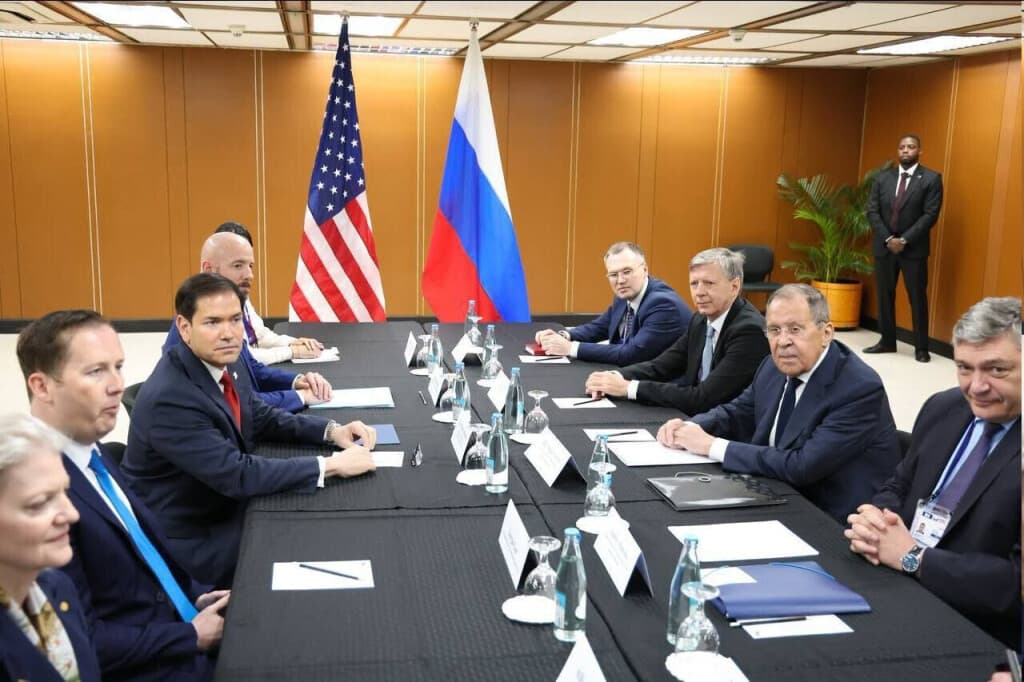
NEW YORK — US Secretary of State Marco Rubio is scheduled to meet Russian Foreign Minister Sergey Lavrov in New York on Wednesday, putting two of the world's most influential diplomatic officials face-to-face as governments search for ways to manage increasingly complex international security challenges.
Reuters reported that the meeting is expected to take place on Wednesday morning in New York, where senior officials and world leaders have gathered during the United Nations General Assembly period.
The talks come against the backdrop of the continuing Russia-Ukraine war, which remains one of the most serious security challenges facing Europe and the wider international community.
Russia and Ukraine have continued exchanging attacks. Recent strikes have caused civilian casualties and damage to infrastructure, while diplomatic efforts have yet to produce a comprehensive settlement. Associated Press reported that the latest escalation coincides with Ukrainian President Volodymyr Zelenskyy's presence in New York for meetings and his UN engagement.
The Rubio-Lavrov meeting therefore provides a direct diplomatic channel between Washington and Moscow at a time when their governments remain divided on several major questions.
Ukraine Remains Central to US-Russia Relations
Ukraine is expected to remain an important part of the broader diplomatic environment surrounding the discussions.
Washington has played a major role in international efforts concerning the conflict, while Moscow continues to defend its military and strategic objectives. Kyiv, meanwhile, has repeatedly sought additional international security assistance and stronger protection of its cities and critical infrastructure.
Recent Russian and Ukrainian attacks demonstrate how difficult it remains to translate diplomatic discussions into a sustained reduction in hostilities.
According to AP, Ukrainian attacks recently targeted Russian oil facilities, while Russian missile and drone strikes caused casualties across several Ukrainian regions. Ukrainian officials have also continued seeking additional air-defence capabilities, including systems capable of protecting major cities and energy infrastructure.
The wider economic consequences extend far beyond the battlefield. Energy infrastructure, agricultural exports, transportation routes and commodity markets can all be affected by developments in the conflict.
UN Gathering Creates Opportunity for Direct Diplomacy
The annual UN gathering in New York creates an unusual concentration of political leaders and senior diplomats in one location, allowing governments that disagree publicly to maintain direct communication through bilateral meetings.
That diplomatic function has become particularly important in 2026.
The United Nations meeting is taking place amid conflicts in Europe and the Middle East, economic uncertainty and disputes over how international institutions should respond to rapidly changing security challenges. Diplomats interviewed by AP described an international environment characterised by multiple conflicts and significant geopolitical uncertainty.
A Rubio-Lavrov meeting does not itself indicate that Washington and Moscow have reached agreement on their major disputes. Instead, it demonstrates that diplomatic channels remain available despite substantial disagreements.
Such meetings can be used to communicate positions, clarify intentions and discuss areas where limited cooperation or further negotiations might be possible.
International Attention on What Comes Next
Governments across Europe and elsewhere will closely watch any public statements emerging after the discussions.
Ukraine and its European partners will be particularly attentive to any discussions relating to military operations, sanctions, security guarantees or possible negotiations.
However, expectations surrounding a single bilateral meeting should remain measured. The underlying disagreements between Russia, Ukraine, the United States and European governments involve territorial, military, political and security questions that have resisted previous diplomatic initiatives.
What happens after the New York meeting may therefore prove more important than the meeting itself.
Any agreement to continue discussions, establish additional diplomatic contacts or address specific security questions could provide an indication of whether the two governments see room for further engagement.
For now, the Rubio-Lavrov meeting represents another significant diplomatic encounter during a UN gathering already dominated by wars, geopolitical competition and questions about the future of international security.
With conflicts continuing across several regions, maintaining direct communication between major powers remains an important part of efforts to prevent further escalation — even when fundamental disagreements remain unresolved.