Siirry pääsisältöön

Ladataan reaaliaikaisia markkinatietoja

DubaiUnited Arab Emirates
--:--:--Säätä ladataan
LondonUnited Kingdom
--:--:--Säätä ladataan
New YorkUnited States
--:--:--Säätä ladataan
São PauloBrazil
--:--:--Säätä ladataan
LagosNigeria
--:--:--Säätä ladataan
JohannesburgSouth Africa
--:--:--Säätä ladataan
CairoEgypt
--:--:--Säätä ladataan
MumbaiIndia
--:--:--Säätä ladataan
SingaporeSingapore
--:--:--Säätä ladataan
TokyoJapan
--:--:--Säätä ladataan
SydneyAustralia
--:--:--Säätä ladataan
Mexico CityMexico
--:--:--Säätä ladataan
Markkinatiedot: ENOSIntel Markets

AI Market Sell-Off Raises Questions About the Cost of the Technology Boom

Investors are reassessing debt, infrastructure spending and future returns as concerns grow over whether artificial intelligence investments can deliver sufficient profits.

Raportti näytetään alkuperäisellä kielellä; käännöstä ei ole vielä saatavilla.

Viimeisin päivitys: 2 min read0
AI Market Sell-Off Raises Questions About the Cost of the Technology Boom
Yhteenveto

A sharp retreat in AI-linked equities is drawing attention to the financial risks behind the race to build increasingly powerful computing systems.

Article contextKey signals, sources and related coverage
Sources recorded
0
Independent sources
0
Published
Last updated

Global technology markets are facing renewed pressure as investors reconsider the financial assumptions supporting the artificial intelligence boom.

Reports published on October 15 described a shift toward safer investments, including government bonds, following a sell-off in AI-related shares. South Korea's technology-heavy equity market was among the hardest hit, while concerns about highly indebted computing infrastructure providers added to market unease.

Reuters +1

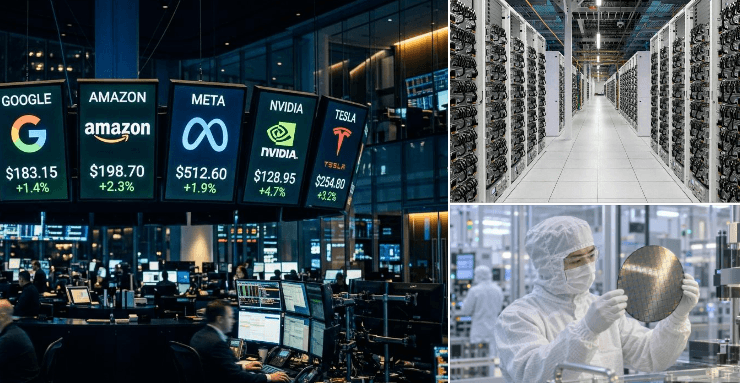
The concerns do not necessarily mean that demand for artificial intelligence is disappearing. Businesses continue to explore AI applications in software development, customer service, scientific research and industrial automation. The challenge for investors is determining whether the revenue generated by these applications will justify the enormous cost of data centers, specialized chips, electricity and network infrastructure.

Building AI capacity requires substantial upfront spending. Companies must secure financing, purchase expensive hardware and manage operating costs that can rise as computing demand expands. If customers adopt services more slowly than expected, or if competition pushes prices downward, returns may fall short of initial projections.

The risks extend across the technology supply chain. Semiconductor manufacturers, cloud providers, equipment suppliers and utilities can all be affected by changes in investment plans. Countries that have encouraged data-center construction may also need to consider electricity availability and infrastructure costs.

At the same time, a market correction could distinguish companies with sustainable business models from those relying heavily on optimistic forecasts. More disciplined spending could ultimately support healthier long-term growth.

Investors will be watching earnings, customer demand and borrowing costs for evidence of whether the sector can maintain its expansion. The larger question is how quickly AI can move from an expensive technological opportunity to a consistently profitable business.

Viimeksi päivitetty: 16. lokakuuta 2026 klo 1.36

Miten tämä raportti palveli sinua?

Valitse yksi vastaus. Voit muuttaa tai poistaa sen milloin tahansa.

Artikkelireaktiot0

Kirjautuneiden valinnat tallennetaan tilille. Anonyymit valinnat käyttävät yksityisyyttä suojaavaa evästettä; ENOSIntel ei sormenjäljitä lukijoita.

Korjaukset ja päivitykset

Raportista ei ole kirjattu julkisia korjauksia.

KorjauskäytäntöIlmoita virheestä tai pyydä oikeuksien tarkistusta

Tekoälyä hyödyntävät älylasit ja puettavat laitteet kohtaavat kasvavan yksityisyystestin, kun teknologiateollisuus katsoo älypuhelinten ulkopuolelle
TekoälyIntl.

Tekoälyä hyödyntävät älylasit ja puettavat laitteet kohtaavat kasvavan yksityisyystestin, kun teknologiateollisuus katsoo älypuhelinten ulkopuolelle

Teknologiateollisuuden etsintä laitteelle, joka voisi lopulta korvata älypuhelimen, kiihtyy, ja tekoälyllä toimivat älylasit ja puettavat avustajat houkuttelevat yhä enemmän investointeja. Mutta samat ominaisuudet, jotka tekevät näistä laitteista tehokkaita – kamerat, mikrofonit, jatkuva yhteys ja tekoälyanalyysi – herättävät huolta yksityisyydestä, tallentamisesta ja suostumuksesta.