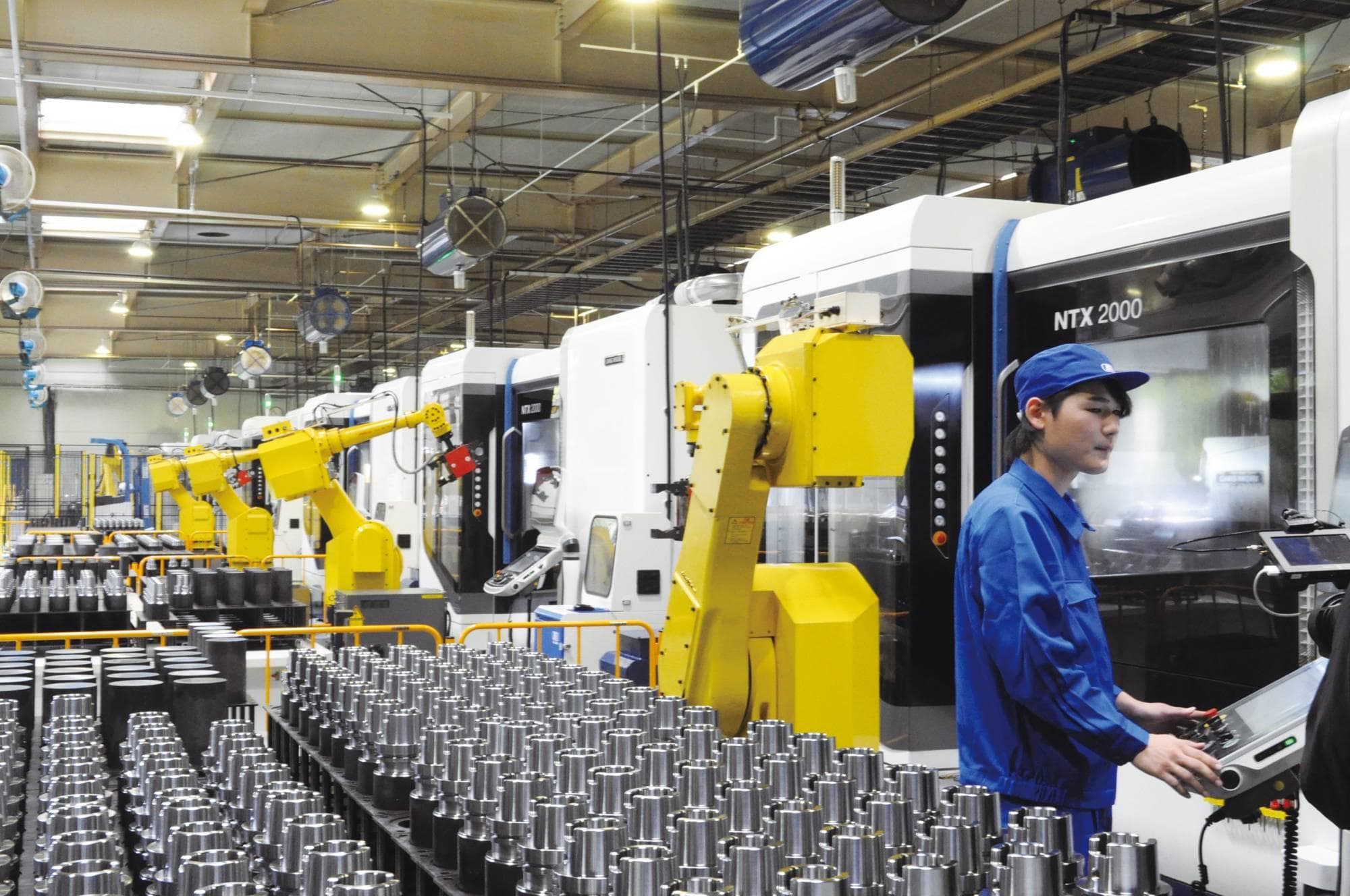
Japan's manufacturing sector expanded at its slowest pace in seven months during October 2026, according to preliminary purchasing managers' data released on 23 October.
The S&P Global Japan Manufacturing Purchasing Managers' Index declined to 53.3 from 54.1 in September.
Although the latest reading remained above the 50-point threshold indicating expansion, the decline suggested that growth in industrial activity was becoming less vigorous.
The survey identified slower increases in factory production and new orders, two important indicators of the health of the manufacturing sector.
For Japan, whose economy includes major automotive, electronics, machinery and advanced industrial businesses, changes in factory activity can provide useful signals about domestic and international demand. New orders indicate softer demand Manufacturers reported that new orders increased at their weakest pace since March.
Factory output also grew at its slowest rate since March, indicating that businesses were experiencing more moderate production requirements.
Across Japan's private sector, new export business increased at the weakest pace in four months.
These developments suggest that overseas demand was still providing some support, although its contribution to growth had weakened.
The survey does not establish that Japan's manufacturing sector is entering a contraction. Instead, it indicates that expansion continued at a slower rate. Employment and inventories offer a mixed picture Factory employment continued to increase at a moderate pace, suggesting that manufacturers had not broadly abandoned plans to maintain or expand their workforces.
Purchasing activity also increased, contributing to the largest accumulation of purchased inventories in almost four years.
Inventory growth can have several explanations.
Businesses may increase their stocks to prepare for future orders, manage supply-chain uncertainty or secure essential materials. Alternatively, inventories can rise when incoming supplies exceed immediate production requirements.
The survey alone does not establish which explanation predominates. Implications for economic policy Japan's industrial outlook is closely connected to the country's broader economic policy environment.
Manufacturing activity affects employment, corporate earnings, capital expenditure and international trade.
A prolonged slowdown in new orders could eventually discourage businesses from expanding production capacity, particularly if demand conditions become less predictable.
Conversely, continued growth in employment and purchasing suggests that many manufacturers are maintaining operations rather than preparing for an immediate downturn.
Investors will therefore examine forthcoming industrial production data, corporate earnings and business surveys for confirmation of the trend.
Japan's latest manufacturing figures describe an economy still experiencing industrial expansion, but with a narrower margin of strength than in September.