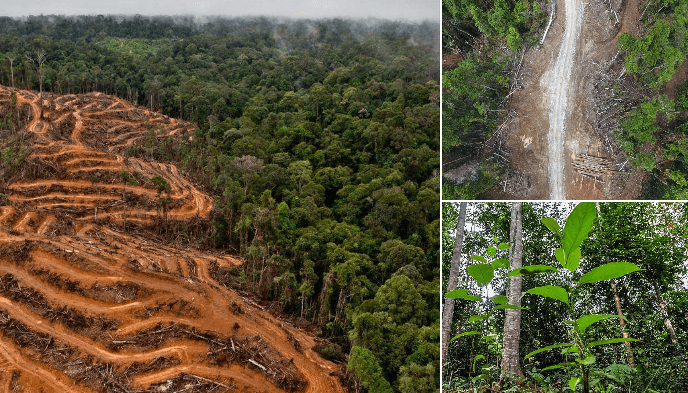
The global effort to protect forests faces a persistent challenge: progress in slowing destruction does not necessarily mean the world is moving quickly enough to meet its environmental commitments. An assessment published on October 14 reported that the world lost more than seven million hectares of forest during 2025, while noting a modest improvement compared with recent years.
The scale of the loss matters because forests perform several functions that are difficult to replace. They store carbon, support biodiversity, influence regional rainfall and help maintain soils and watersheds. Forests also sustain communities through food, employment, cultural practices and other resources.
Deforestation can result from agricultural expansion, commercial logging, infrastructure development, fires and illegal land clearing. The relative importance of these pressures varies by region, meaning effective policies must be tailored to local conditions rather than relying on a single global solution.
International commitments to protect forests by 2030 have increased political attention, but implementation remains difficult. Governments must balance conservation with demand for agricultural products, timber, roads, housing and economic development. Where land rights are unclear or enforcement is weak, forest protection policies can struggle to deliver lasting results.
There are practical options. Satellite monitoring can help authorities identify new clearing, while stronger land governance can make illegal activity easier to investigate. Indigenous and local communities can play an important role when their rights are recognised and they have meaningful influence over land-management decisions.
Businesses also face pressure to examine supply chains for commodities associated with forest destruction. Transparent sourcing and credible independent monitoring can improve accountability, although certification alone does not guarantee that every environmental impact has been addressed.
Restoration can help degraded landscapes recover, but planting trees is not a complete substitute for preserving mature, biodiverse forests.
The challenge is therefore twofold: prevent avoidable destruction and ensure that remaining forests are managed sustainably. The figures reported for 2025 provide a warning that international targets will require measurable progress, reliable financing and stronger implementation rather than commitments alone.