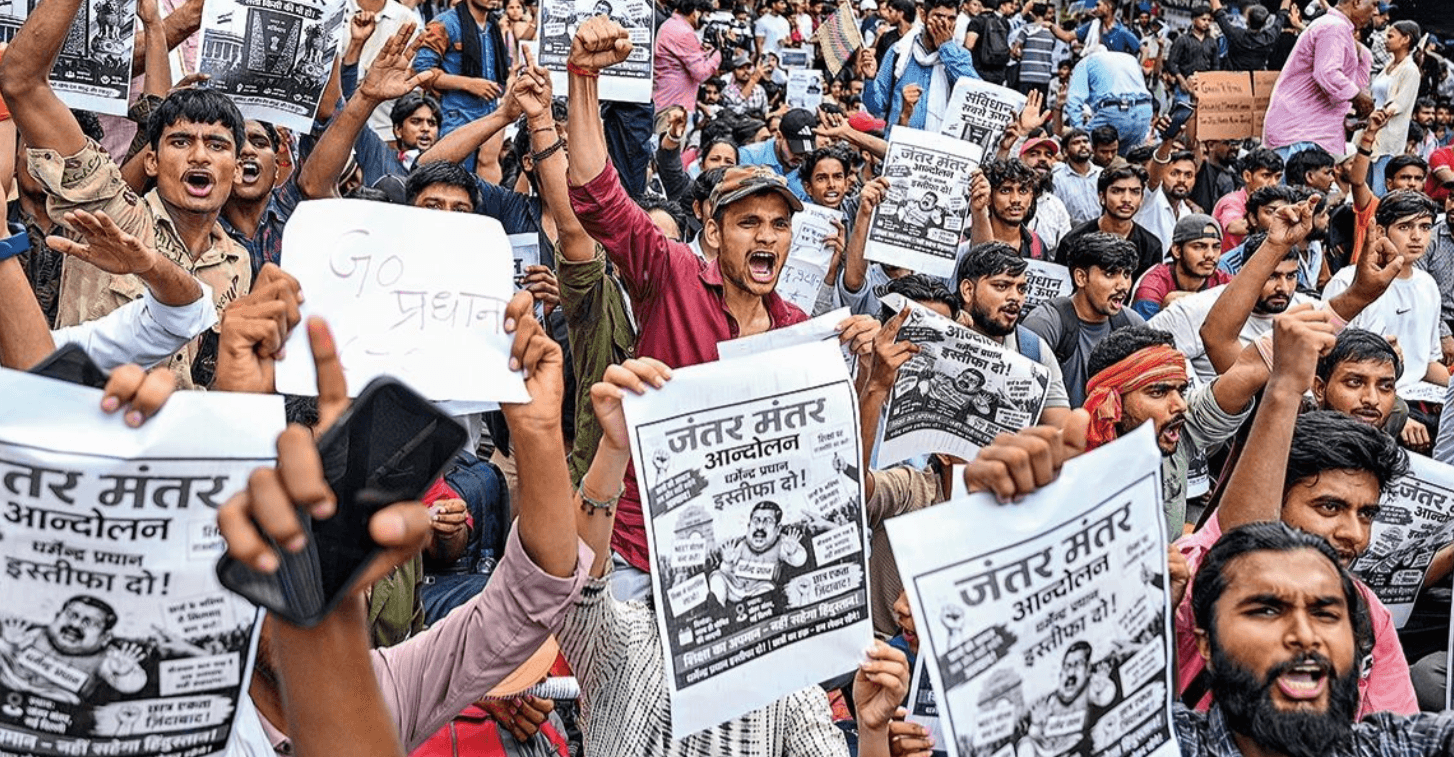
India's political landscape is facing renewed uncertainty as youth-led demonstrations and opposition protests over electoral changes put pressure on Prime Minister Narendra Modi's government.
According to Reuters reporting published on October 13, a protest movement known as the Cockroach Janta Party, initially associated with anger over examination paper leaks, has expanded its campaign to include concerns about electoral administration. The demonstrations have focused on the removal of approximately 130 million names from voter rolls, a development that critics argue requires greater transparency and independent scrutiny.
The scale of the reported changes has made voter registration a major political issue. Opposition figures and protesters have questioned whether eligible citizens could be affected and have called for accountability from electoral authorities. The Election Commission and the governing Bharatiya Janata Party have rejected allegations of wrongdoing, according to the report.
The controversy comes at a politically sensitive time, as India prepares for future electoral contests and political parties seek to consolidate public support. Disputes involving voter eligibility can have far-reaching implications because confidence in electoral institutions is essential to the legitimacy of democratic processes.
The demonstrations also reflect broader frustrations among younger citizens. Concerns about education, employment opportunities, political representation and government accountability have contributed to public debate in the world's most populous country.
For the government, the challenge is to address questions about electoral procedures while maintaining public confidence in democratic institutions. Clear explanations, transparent verification processes and accessible mechanisms for correcting voter records could help reduce uncertainty.
For opposition parties, the issue offers an opportunity to demand institutional accountability, although allegations of misconduct must be evaluated against verifiable evidence.
The coming days will be important in determining whether the protests expand, whether authorities provide further clarification and how the dispute influences India's wider political debate. The outcome could shape public confidence in electoral administration well beyond the immediate controversy.